November 9, 2026
Micah Peavy Gets a New Opportunity With Oklahoma City
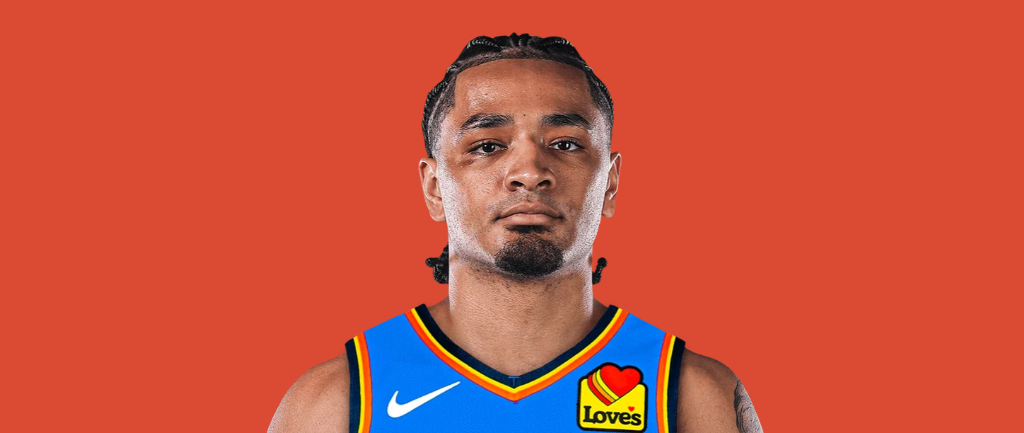
Micah Peavy’s Rookie Flashes Give the Thunder an Intriguing Two-Way Addition
Written by Logan Dykhouse
Micah Peavy’s rookie NBA season began with a four-year contract and ended with a career-high 21 points. Six months later, he is back on a two-way deal.
Oklahoma City signed the 25-year-old wing on Oct. 23, only four days after Memphis waived him to finalize its regular-season roster. Peavy was productive in stretches for New Orleans last season, appearing in 61 games after arriving as the 40th overall pick in the 2025 NBA Draft. Now he joins an organization with a record of developing overlooked players into contributors.
It is a chance to rebuild the momentum that made him an intriguing second-round investment.
Key Takeaways:
Micah Peavy signed a two-way contract with the Oklahoma City Thunder after being waived by the Memphis Grizzlies.
New Orleans selected Peavy 40th overall in 2025 and signed him to a four-year deal with $3.4 million guaranteed.
Peavy appeared in 61 games as a rookie, showing defensive versatility and occasional offensive production.
Injuries to Jalen Williams and Cason Wallace have created additional opportunities for Peavy in Oklahoma City's rotation.
Through four November games, Peavy has averaged 6.0 points and 5.3 rebounds while shooting 36.4% from three.
Oklahoma City's history of developing two-way players provides Peavy a potential pathway to a standard NBA contract.
New Orleans Gave Peavy a Four-Year Rookie Deal
The Pelicans showed confidence in Peavy after the draft, signing him to a four-year deal worth approximately $8.7 million. About $3.4 million was guaranteed, covering his first two seasons. The final two seasons offered team flexibility.
Unlike first-round picks, second-rounders do not always receive guaranteed rookie-scale deals, making that commitment notable.
Peavy had earned attention at Georgetown, where he averaged 17.2 points, 5.8 rebounds, 3.6 assists and 2.3 steals in his final college season. He shot 40% from three, reinforcing his potential as a versatile wing.
A Gradual Opening in the Pelicans’ Rotation
Peavy made brief appearances early in the season before injuries across New Orleans’ roster opened more opportunities. He eventually earned defensive assignments and occasional extended runs.
He finished with 61 appearances, four starts and averages of 4.3 points, 1.9 rebounds, 1.0 assist and 0.7 steals in 15.0 minutes. His shooting numbers were less encouraging: 38.5% from the field and 25.9% from three on 1.8 attempts per game.
Those percentages are concerning, but incomplete. Peavy often moved between limited minutes and larger responsibilities, with some of his best performances coming when he had time to settle into games.
One of His Best Games Came Against Oklahoma City
On Nov. 17, 2025, Peavy delivered one of his first substantial offensive performances against the team that has now signed him.
In 24 minutes against the Thunder, he scored 16 points on 7-for-9 shooting, made two of his three three-point attempts and added four rebounds and four assists. New Orleans lost 126-109, but Peavy showed he could contribute offensively without demanding a large role.
His strongest defensive box score came Jan. 21 against Detroit. Peavy finished with 17 points, seven rebounds, four steals and a block in 27 minutes, making three three-pointers. That combination hinted at his potential as a versatile rotation wing.
Peavy Finished His Rookie Year Strong
The final week of the season brought his highest scoring totals.
On April 7 against Utah, Peavy scored 20 points on 9-for-13 shooting, adding four rebounds, two assists and two steals in 36 minutes. Five days later, he logged a season-high 41 minutes in the finale at Minnesota and set a new career high with 21 points. He shot 6-for-12 from the floor and 2-for-4 from three, with four rebounds, three assists, one steal and two blocks.
Those late-season games came with minutes Peavy did not always receive earlier. They still demonstrated that he could stay involved on both ends when his role expanded. For a second-round rookie, 61 games and several legitimate NBA performances were a useful foundation.
New Orleans Traded Peavy to Create Financial Flexibility
Despite that foundation, Peavy did not make it to his second season with the Pelicans.
On Sept. 8, New Orleans sent him and Jordan Hawkins to Memphis, along with a future second-round pick and a pick swap, in exchange for AJ Johnson and Taj Gibson. The trade was primarily financial. New Orleans needed room beneath the first salary-cap apron to sign Bennedict Mathurin using the non-taxpayer mid-level exception.
The Pelicans were moving contracts, not necessarily questioning Peavy’s potential. Memphis acquired draft assets but had limited roster space. Hawkins was waived in early October and subsequently signed a two-way deal with Chicago, as detailed in our breakdown of his move to the Bulls.
Peavy remained with Memphis into the final week of preseason, although an ankle injury kept him out of all four exhibition games. On Oct. 19, the Grizzlies waived Peavy and Walter Clayton Jr. to reach the 15-player limit, ending Peavy's brief stay in Memphis.
Oklahoma City Offers a Proven Two-Way Pathway
Oklahoma City has a history of developing players outside the first round.
Lu Dort began on a two-way contract before becoming a long-term defensive fixture. Aaron Wiggins followed a similar path, developing into a championship contributor. Ajay Mitchell entered on a two-way in 2024 and earned a standard contract during his rookie season.
Not every example has resulted in stardom. Lindy Waters III earned a standard contract after beginning on a two-way and established a multiseason NBA career. Branden Carlson also spent time on a two-way with Oklahoma City before signing a standard deal with Portland this summer.
That history does not guarantee Peavy a conversion, but it demonstrates the organization's ability to develop two-way talent.
What Peavy Brings to the Thunder
At 6-foot-7, Peavy brings positional size, defensive versatility and an active motor. He can pressure the ball, disrupt passing lanes and contribute as a cutter or transition finisher without needing plays called for him.
His arrival comes as Oklahoma City deals with significant injuries. Jalen Williams suffered a fractured fibula and dislocated ankle, while Cason Wallace underwent surgery for a torn labrum in his left shoulder. Chet Holmgren is also expected to miss eight to 10 weeks with a knee injury. The absences of Williams and Wallace, in particular, leave the Thunder needing additional perimeter defense.
The question is whether Peavy can shoot well enough to stay on the floor. His 40% three-point season at Georgetown suggested progress, but his rookie NBA percentage of 25.9% left that improvement unproven. Consistent spacing will matter alongside Oklahoma City’s primary creators.
The two-way contract also allows Peavy to develop with the Oklahoma City Blue while remaining available for NBA minutes.
Peavy Is Already Finding Minutes in November
The Thunder’s injury situation has given Peavy an opportunity early in his second NBA season, and he is beginning to take advantage.
Through four November appearances, Peavy is averaging 6.0 points and 5.3 rebounds in 20.8 minutes per game. He has also shot 36.4% from three on 2.8 attempts per game, an encouraging improvement from his rookie percentage.
His contributions extend beyond scoring. Peavy grabbed nine rebounds against Cleveland on Nov. 4 and recorded three steals against Washington three days later, demonstrating the defensive activity and rebounding that could help sustain his role.
If Peavy continues contributing through rebounds, steals and blocks while knocking down three-pointers at a league-average rate, he could establish himself as a consistent member of Oklahoma City's rotation, particularly while the Thunder remain shorthanded.
Peavy Leads Oklahoma City’s Two-Way Room
Peavy joins Brooks Barnhizer and Josh Dix in Oklahoma City’s two-way group. Barnhizer is another physical, defensive-minded wing whose offense is still developing, while Dix provides more of an off-ball shooting profile.
Two-Way Talents rates Peavy as a four-star prospect, the highest mark in this group. Oklahoma City is tied for 25th in the site's team rankings, but Peavy brings more NBA experience than either of his new two-way teammates.
A year ago, New Orleans gave him substantial guaranteed money because it believed he could become a useful NBA wing. One salary-driven trade and a difficult roster cut later, that possibility has not disappeared. Oklahoma City now gets the chance to develop it.